





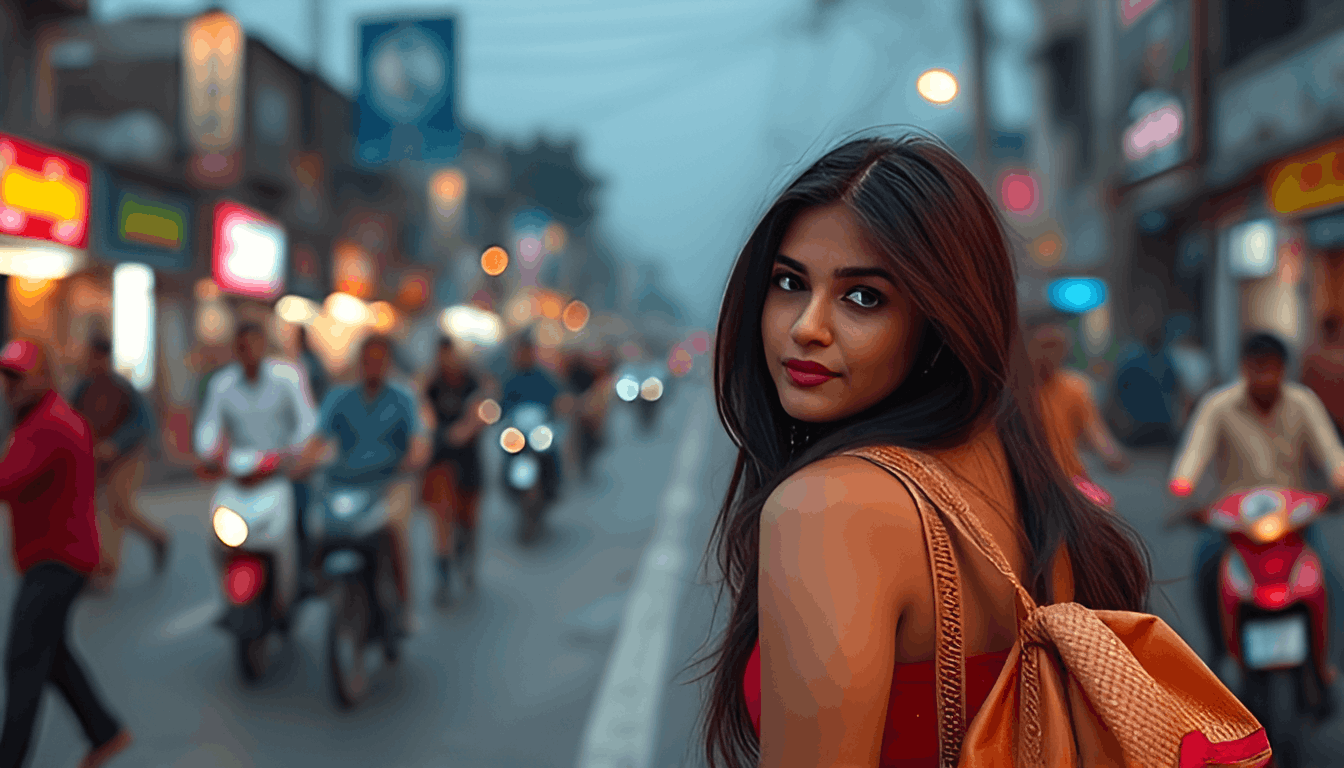

Delhi Escorts Service
The “Delhi Escorts“: Identity, Aspirations, and Urban Modernity
Introduction The phrase “Delhi Escorts Service” evokes a complex constellation of images, stereotypes, aspirations, and social dynamics. It is not a formal category but rather a social shorthand used in conversations, media portrayals, and personal imaginaries to describe a particular type of young woman associated with India’s capital. Beneath this shorthand lie issues of gender, class, culture, and urban transformation. This essay explores the multiple meanings attached to the label, situates it within Delhi’s social and historical context, examines its implications for identity and agency, and reflects on how it intersects with broader debates about modernity, mobility, and gendered expectations in contemporary India.
Context: Delhi as Symbol and Setting Delhi occupies a unique place in India’s political, cultural, and social geography. As the national capital and a megacity with centuries of layered history, it is both a site of power and a locus of aspiration. Migration from smaller towns and rural areas has transformed Delhi into a melting pot of languages, religions, and lifestyles. This urban dynamism produces new social categories and aspirational identities; the “Delhi Escorts” is one such emergent figure, shaped by the city’s educational institutions, commercial possibilities, media influences, and social networks.
Characterizing the “Delhi Escort” Any attempt to define the “Escorts Service in Delhi” must begin by acknowledging the diversity of young women in the city. Nonetheless, popular usage tends to evoke a set of characteristics—some descriptive, others prescriptive:
- Urban-facing aspirations: She is imagined as focused on education, career, and social mobility. She often pursues higher education or employment in white-collar sectors such as media, finance, technology, or the creative industries.
- Cosmopolitan sensibilities: The image suggests familiarity with global trends in fashion, music, and lifestyle. This cosmopolitanism may coexist with local cultural references, producing hybrid modes of expression.
- Independence and agency: The archetype emphasizes a degree of personal autonomy—financial independence, mobility across the city, and participation in public life—though degrees of independence vary widely among individuals.
- Negotiated respectability: The “Delhi Escorts” is often coded as modern but respectable, walking a line between progressive behavior and socially acceptable conduct. This balance is particularly salient in contexts of family expectations and marriage markets.
- Visibility and social capital: Active on social media, engaged with public events, and networked through educational and professional circles, she leverages visibility as a form of social and cultural capital.
These characteristics function as both description and social script. For some, the label can be empowering, signaling upward mobility and modern identity; for others, it can feel reductive, flattening complex lives into consumable tropes.
Historical and Cultural Roots The archetype is rooted in historical processes that have shaped women’s roles in Indian cities. Colonial-era education reforms, nationalist movements that mobilized women in public spheres, and post-independence expansion of higher education and employment all contributed to new possibilities for women’s social participation. In Delhi, institutions such as universities and cultural organizations became crucibles for female agency. Economic liberalization from the 1990s onward accelerated consumer culture and media proliferation, creating expanded imaginaries of desirable lifestyles and careers. The “Delhi Escorts” thus emerges from an intersection of educational access, market-driven opportunity, and media representation.
Media, Fashion, and the Economies of Aspiration Mass media and social platforms play a crucial role in disseminating images of urban femininity. Television serials, films, lifestyle magazines, and, more recently, Instagram and YouTube craft and circulate visual and narrative templates for what success and modernity look like. Fashion and beauty industries, intertwined with these media, commodify aesthetics and offer accessible ways to perform identity. For many young women in Delhi, adopting certain styles or participating in particular consumer practices is both a personal choice and a strategic investment in social mobility—performances of taste that can open doors in education, employment, and social networks.
Intersectionality: Class, Caste, Religion, and Regional Origins It is essential to emphasize that “Call girls in Delhi” is not a neutral or universal category. Class shapes access to the education, fashion, and mobility that underpin the archetype. Upper- and middle-class families can more readily provide the material resources and social capital necessary to inhabit this identity; for lower-income women, the label may be aspirational yet difficult to realize. Caste and religion mediate social acceptance and familial expectations; a young woman from a conservative community may face stricter constraints than her peer from a more liberal milieu. Additionally, many women in Delhi are migrants from other states—Bihar, Uttar Pradesh, Haryana, Northeast India, and beyond—and their regional origins interact with local norms in complex ways, influencing language, dress, and social networks. Thus the “Delhi Escorts” is a partial and uneven category shaped by intersecting axes of privilege and marginalization.
Family, Marriage, and Generational Negotiation Family dynamics are central to how young women navigate identity. Many families encourage education and careers while still expecting adherence to cultural or religious norms, especially around marriage. The “Escorts” may be supported in obtaining a degree or job but also pressured to conform to expectations around marriage suitability, dowry practices, or residential decisions. This creates generational negotiations: parents may view modern education as a means to improve family status, while daughters interpret it as a route to personal autonomy. The result is a continuous, negotiated choreography between individual aspirations and collective familial responsibilities.
Public Space and Safety Urban mobility—moving through streets, campuses, workplaces, and nightlife—constitutes a crucial dimension of the “Escorts in Delhi” identity. However, women’s engagement with public space is mediated by concerns about safety and harassment, which remain pressing in Delhi and other Indian cities. Strategies to navigate these challenges—such as companionate travel, selective timing of outings, and use of curated routes—shape everyday practices. Moreover, public debates about safety often carry moralizing overtones that regulate women’s behavior, reinforcing double standards about respectability even as women assert their right to occupy public spaces.
Resistance and Agency Despite constraints, Delhi Call Girls exercise agency in creative ways. Student activism, feminist collectives, entrepreneurship, arts and culture participation, and digital storytelling are avenues through which women shape discourse and claim space. Social movements—against sexual violence, for reproductive rights, and for labor and educational reforms—have been energized by urban women who deploy both traditional organizing and digital tools. In these arenas, the “Delhi Escorts” transforms from a passive stereotype to an active agent of social change.
Critiques and Dangers of Stereotyping The prevalence of the “Delhi Escorts” trope risks flattening diversity and perpetuating normative standards. It can imply that certain forms of femininity and mobility are more legitimate or modern than others, marginalizing alternative choices and reinforcing class-based exclusion. Moreover, the trope can be weaponized in public discourse to police women’s behavior or rationalize restrictions. Critical engagement requires unpacking the power relations embedded in such shorthand and amplifying voices that challenge monolithic narratives.
Conclusion: Toward Nuanced Understandings The “Delhi Escort Service” is less a fixed identity than a lens through which to examine contemporary urban India’s gendered transformations. It reflects aspirations seeded by education, media, and economic change; it is stratified by class, caste, religion, and regional origin; and it is contested terrain where agency and constraint intersect. Moving beyond caricature involves recognizing the plurality of women’s experiences in Delhi—celebrating agency where it exists, acknowledging structural barriers, and attending to the ways in which public narratives shape private lives. Ultimately, understanding the “Delhi Escorts” requires situating individual biographies within broader social processes of urbanization, modernization, and struggle for gender equity.









Frequently Asked Questions (FAQ)
1. What is DelhiMasla.com?
DelhiMasla.com is a website that provides city-specific listings and informational
content for adult users. Visitors can browse pages for different locations and explore
the available information on the website.
2. Is DelhiMasla.com only for adults?
Yes. The website is intended strictly for users who are 18 years of age or older.
Anyone under the age of 18 should not access the website.
3. Do I need to create an account?
No. Visitors can browse the publicly available content without creating an account,
unless a specific feature requires registration.
4. Is DelhiMasla.com available in multiple cities?
Yes. The website includes pages covering multiple cities across India, making it easy
for visitors to find location-specific information.
5. Is my privacy protected while browsing?
DelhiMasla.com encourages users to review its Privacy Policy and use the website
responsibly. Visitors should avoid sharing sensitive personal information publicly.
6. Is the information updated regularly?
Website content may be updated from time to time to improve accuracy and user
experience.
7. Can I access DelhiMasla.com on mobile devices?
Yes. The website is designed to be accessible on smartphones, tablets, laptops,
and desktop computers.
8. How can I contact DelhiMasla.com?
Please visit the website’s Contact page or use the contact information provided on
the website for inquiries and support.
Frequently Asked Questions (FAQ)
1. What is DelhiMasla.com?
DelhiMasla.com is a website that provides city-specific listings and informational
content for adult users. Visitors can browse pages for different locations and explore
the available information on the website.
2. Is DelhiMasla.com only for adults?
Yes. The website is intended strictly for users who are 18 years of age or older.
Anyone under the age of 18 should not access the website.
3. Do I need to create an account?
No. Visitors can browse the publicly available content without creating an account,
unless a specific feature requires registration.
4. Is DelhiMasla.com available in multiple cities?
Yes. The website includes pages covering multiple cities across India, making it easy
for visitors to find location-specific information.
5. Is my privacy protected while browsing?
DelhiMasla.com encourages users to review its Privacy Policy and use the website
responsibly. Visitors should avoid sharing sensitive personal information publicly.
6. Is the information updated regularly?
Website content may be updated from time to time to improve accuracy and user
experience.
7. Can I access DelhiMasla.com on mobile devices?
Yes. The website is designed to be accessible on smartphones, tablets, laptops,
and desktop computers.
8. How can I contact DelhiMasla.com?
Please visit the website’s Contact page or use the contact information provided on
the website for inquiries and support.
Delhi Escorts Service: Sociological, Legal, and Economic Dimensions
Introduction
The escort service industry in Delhi represents a complex and multifaceted phenomenon that intersects with broader questions of urbanization, economic inequality, legal frameworks, and social morality. As one of India’s largest metropolitan areas, Delhi hosts a significant service sector that includes escort services, which operate within a contested regulatory environment. This essay examines the delhi escorts service industry through multiple lenses—sociological, economic, legal, and ethical—to provide a comprehensive understanding of its characteristics, implications, and the challenges it presents to policymakers, social workers, and civil society.
Defining Escort Services
Before proceeding with a substantive analysis, it is essential to define what constitutes an escort service. Broadly speaking, escort services involve individuals (typically women, though not exclusively) who are hired to accompany clients to social events, provide companionship, or engage in other agreed-upon services. The distinction between escort services and sex work is often blurred in popular discourse and legal frameworks, though practitioners and service providers frequently emphasize that companionship is their primary offering. This definitional ambiguity creates significant challenges for legal regulation and social analysis.
Socioeconomic Context
Delhi’s escort service industry must be understood within the context of India’s broader economic landscape and the specific characteristics of the national capital. India’s rapid urbanization over the past three decades has created numerous opportunities for service sector growth, while simultaneously exacerbating economic disparities. Delhi, as the nation’s capital and a major economic hub, attracts considerable wealth alongside persistent poverty and economic vulnerability.
The escort service industry, like many service sectors in developing economies, serves as a magnet for individuals seeking income opportunities, particularly women facing limited employment prospects in formal sectors. The city’s large floating population of migrants, students, and transient workers creates both a supply of service providers and a demand among clients seeking companionship and social interaction. The proliferation of technology and digital platforms has further transformed how these services are marketed, negotiated, and accessed, creating new dynamics in the industry.
The Digital Transformation
The advent of digital technology and online platforms has fundamentally altered how escort services are marketed and accessed in Delhi. Websites, mobile applications, and social media platforms have created new marketplaces where service providers can advertise independently without necessarily relying on intermediaries or brothel owners. This technological shift has both positive and negative implications.
On the positive side, digital platforms have reduced dependence on exploitative intermediaries and provided service providers with greater control over their work schedules and client selection. Providers can screen clients, set their own rates, and maintain greater autonomy over their services. Additionally, digital platforms have enabled better dissemination of safety information and created virtual communities where providers can share experiences and advice.
However, digitalization has also created new vulnerabilities. The permanence of digital records creates risks for individuals seeking to exit the industry or maintain privacy. Online platforms are frequently used for trafficking and exploitation, with individuals coerced into sex work through false recruitment promises. The anonymity provided by digital platforms has also facilitated the exploitation of minors and has made law enforcement’s task of identifying and preventing abuse more challenging.
Client Demographics and Motivations
Understanding the clientele of escort services provides important context for analyzing the industry. Delhi’s service clients represent diverse demographics, including wealthy businesspeople, expatriates, tourists, and middle-class professionals. Research indicates that clients’ motivations vary considerably—some seek companionship for social events, others desire intimate services, and still others may be seeking emotional connection or validation.
The presence of clients from various socioeconomic backgrounds suggests that the demand for escort services cuts across class boundaries. This observation challenges simplistic narratives that attribute demand primarily to socially marginalized individuals. Instead, it indicates that escort service demand reflects broader features of urban life, including loneliness, disconnection, and the commodification of intimate human contact in capitalist societies.
Gender Dynamics and Intersectionality
The escort service industry in Delhi must be analyzed through a gendered lens, acknowledging that the overwhelming majority of service providers are women, while the majority of clients are men. This gendered structure reflects and reproduces broader patterns of gender inequality, including differential economic power, occupational segregation, and the commodification of female sexuality.
However, the experience of women in the escort service industry is not monolithic. Intersectionality—the recognition that gender intersects with class, caste, religion, migration status, and other social categories—is crucial for understanding diverse experiences. Dalit and lower-caste women may face particular vulnerabilities due to historical patterns of sexual exploitation and economic marginalization. Migrant women, including those from other Indian states and South Asian countries, may lack social networks and legal protections. Women with educational disadvantages or limited formal sector opportunities may have more constrained choices than educated middle-class women who enter escort work by conscious choice.
The Question of Consent and Coercion
A central issue in analyzing escort services is the question of genuine consent versus coercion. While some individuals enter the sex work or escort service industry as a deliberate choice, others are compelled by circumstances of extreme poverty, family abandonment, trafficking, or manipulation. Distinguishing between these categories proves extraordinarily difficult in practice.
The concept of “choice” itself becomes complex in conditions of structural inequality. A woman facing destitution, who “chooses” escort work because it offers better income than available alternatives, may exercise agency within a constrained set of options but does not exercise choice in a meaningful sense. This paradox—the simultaneous reality of human agency and structural constraint—remains at the heart of debates about the ethics and legality of the industry.
Health and Safety Concerns
Individuals engaged in escort work face significant health and safety risks. The informal nature of the industry often means that providers lack access to health insurance, formal workplace protections, or reliable income. Violence from clients represents a persistent hazard, with service providers often unable to report crimes to police without legal risk to themselves. Sexually transmitted infections present another health concern, particularly where access to preventive services and regular medical care is limited.
The psychological dimensions of escort work also warrant attention. Research on sex workers in various contexts indicates elevated rates of depression, anxiety, and post-traumatic stress disorder. The stigma associated with the work, combined with the potentially traumatic nature of intimate interactions with strangers, takes a psychological toll on many providers.
Human Trafficking and Exploitation
While not all escort service provision involves trafficking or forced labor, the industry does provide opportunities for exploitation and trafficking networks. The lucrative nature of the business can create incentives for criminal networks to recruit women through false promises, debt bondage, or coercion. Delhi’s position as a major metropolitan area with significant wealth inequality and a large migrant population creates conditions favorable to trafficking operations.
The distinction between trafficking for exploitation and consensual adult service provision remains contested and difficult to verify empirically. Law enforcement agencies must navigate the challenge of identifying genuine trafficking victims while respecting the autonomy of adults who consensually engage in service provision. This challenge is complicated by the fact that trafficking situations exist on a spectrum; an individual might have initially entered service provision through choice but subsequently find themselves trapped through debt bondage or other mechanisms.
Social Stigma and Reintegration
Individuals engaged in escort services face considerable social stigma in Indian society, where sexual morality remains a significant social concern and traditional gender roles remain influential despite processes of modernization. This stigma extends beyond individual judgment to create material barriers to employment, housing, and social integration. A woman with a history of escort work may find herself unable to secure formal sector employment, housing in respectable neighborhoods, or acceptance within her family and community.
The challenges of exiting the industry and reintegrating into mainstream society represent significant barriers to leaving escort work, even for individuals who wish to do so. Without comprehensive social support systems, including vocational training, psychological counseling, and economic assistance, individuals seeking to exit the industry face formidable obstacles. This structural reality effectively traps some individuals in the industry despite their desire to leave.
Policy Perspectives and Reform Proposals
Various policy approaches to escort services and sex work exist globally, and their applicability to the Delhi context deserves consideration. The criminalization approach, currently dominant in India, focuses on deterrence and punishment but has been criticized for driving the industry underground and increasing vulnerability. The legalization and regulation approach, adopted in jurisdictions like parts of Australia and Germany, seeks to bring the industry within a regulatory framework that provides worker protections and enables taxation. The decriminalization approach, advocated by many sex worker advocacy organizations, involves removing criminal penalties while maintaining prohibition of trafficking and exploitation.
Each approach presents different tradeoffs. Criminalization arguably fails to prevent the industry while increasing danger for providers. Legalization and regulation can improve working conditions but risks creating new forms of formalization that marginalize those outside the regulatory framework. Decriminalization respects autonomy but may be difficult to implement effectively in an Indian legal context and may fail to address trafficking effectively.
The escort service industry in Delhi represents a complex phenomenon that cannot be adequately understood through simple moral judgments or reductive analyses. The industry intersects with broader issues of gender inequality, economic marginalization, urbanization, and the governance of intimate human interactions in capitalist societies. While some individuals engage in escort work through genuine choice and exercise considerable agency, others face constrained options and vulnerability to exploitation and trafficking.
Addressing the challenges presented by the escort service industry requires nuanced policy approaches that recognize both the reality of human agency and the structural constraints that limit meaningful choice. Such approaches must prioritize the safety, health, and dignity of individuals engaged in the industry, work to eliminate trafficking and exploitation, support those seeking to exit the industry, and ultimately address the underlying conditions of inequality that make escort work an attractive or necessary option.
Future policy development should involve meaningful consultation with sex worker advocacy organizations, service providers themselves, public health experts, and social service professionals. The goal should be to move beyond moralistic frameworks toward pragmatic approaches that reduce harm, protect vulnerable populations, and respect the autonomy of consenting adults. Only through such comprehensive and evidence-based approaches can society address this complex phenomenon effectively and ethically.










🔞 18+ Adult Content Warning
This website contains material intended for adults only. By continuing, you confirm that you are at least 18 years of age.